Survey respondents share what worked, what didn't, and what they'd change when landscaping with native plants and trees
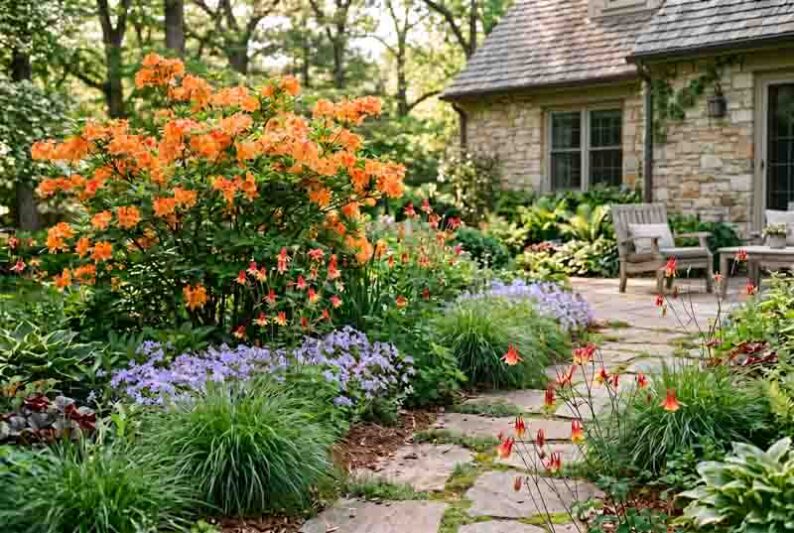
The Institute for Applied Ecology just released a survey of 1,274 people who have landscaped with native plants. The report calls it gardening, or “naturescaping.” We call it nativescaping: landscaping with native plants and trees. Here’s what they found.
- Why: 93% wanted pollinator habitat, and 73% wanted to use less water.
- Wildlife: Over 80% saw pollinators and birds within the first year.
- Neighbors: More than 85% heard positive feedback from neighbors.
- Climate: In a follow-up survey, 87% expected climate change to affect their plantings, and 61% have already changed which species they choose.
What they’d change
Asked what they’d do differently, 62% said they’d learn more about their plants’ needs first: size at maturity, spread, sun and moisture. A third would remove weeds more thoroughly before planting, and a quarter would plan paths.
That’s the problem Greenprints solve, before you spend a dollar: native plants and trees matched to your site and goals, each with its mature size, plus a planting and maintenance timeline for every season.
The barriers/difficulties
Cost (46%) and physical labor (37%) were the top two. This is where Greenprints are incredibly useful. Once you have your Greenprint, you can nativescape over time, guided by it. Nativescape in portions: start with a few plants from your Greenprint’s timeline, and add more each season as your budget and energy allow. Email your Greenprint to yourself, or add its timeline to your calendar, so you can pick up where you left off.
Source
The Gardening for Nature Survey — Kaye, T.N. and Katon, P., 2026. Institute for Applied Ecology.