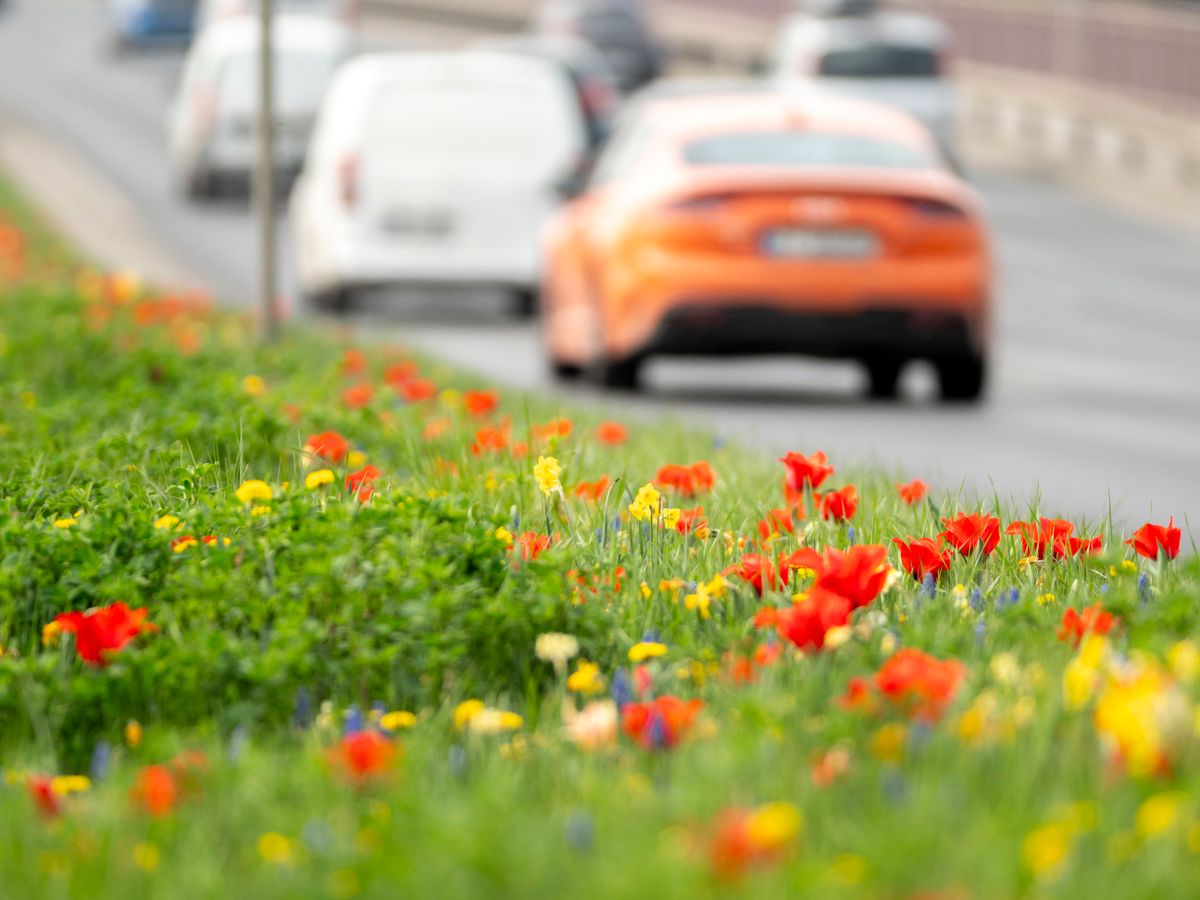
Oregon Dept of Transportation (ODOT) just landed $150,000 in federal funding to restore pollinator habitat along Oregon's state highways. The grant will enable ODOT to plant native seed mixes and adjust mowing schedules along the rights-of-way.
Why it matters, at a glance
- This is the same SmartScape principle, on a bigger canvas. Every backyard nativescaping choice that we advise — swapping turf and ornamentals for native plant and trees species — scales up here to thousands of highway miles.
- Less maintenance, less chemicals. Interim ODOT Director Chris Warner said the habitat work should reduce the long-term need for pesticide use to control weeds while also boosting drought and fire resiliency — the exact "little-to-no irrigation, little-to-no chemicals once established" payoff we talk about with home native plantings.
- For the species that most need it. Native bees and Monarch butterflies are specifically targeted in the project as beneficiaries. They're two of the pollinator groups seeing the steepest population declines.
- Not everyone is convinced it's the best use of funds. One Rogue Valley resident questioned how effective habitat along busy roads will be, citing concerns about traffic, runoff, and roadside pollution, and argued city parks might be easier to maintain long-term. But nativescaping doesn't add to runoff, indeed it reduces toxic runoff by eliminating the need for herbicides and pesticides. And it will add to the mosaic of native landscapes everywhere.
- This isn't a new idea. Lady Bird Johnson championed the same principle 60 years ago: the Highway Beautification Act of 1965 seeded wildflowers along Texas highways, proving native plants could thrive along roadsides with minimal upkeep. That legacy lives on today in the federal Surface Transportation and Uniform Relocation Assistance Act of 1987, which still requires that at least one-quarter of one percent of highway landscaping funds go toward planting native wildflowers and grasses.
The bigger picture: pollinator habitat doesn't have to live only in backyards or city parks. Every strip of native vegetation along a shoulder or median is more nectar and forage, and fewer chemicals in the landscape — it all adds up to a more vibrant, resilient world!
Sources
- Oregon gets $150K to create habitat for bees and butterflies — OPB
- Merkley, Wyden Secure Federal Funding to Expand Pollinator Habitat Along Oregon Highways — Senator Jeff Merkley
- Acts of Beauty — Lady Bird Johnson Wildflower Center